Spontaneous Collective Singing
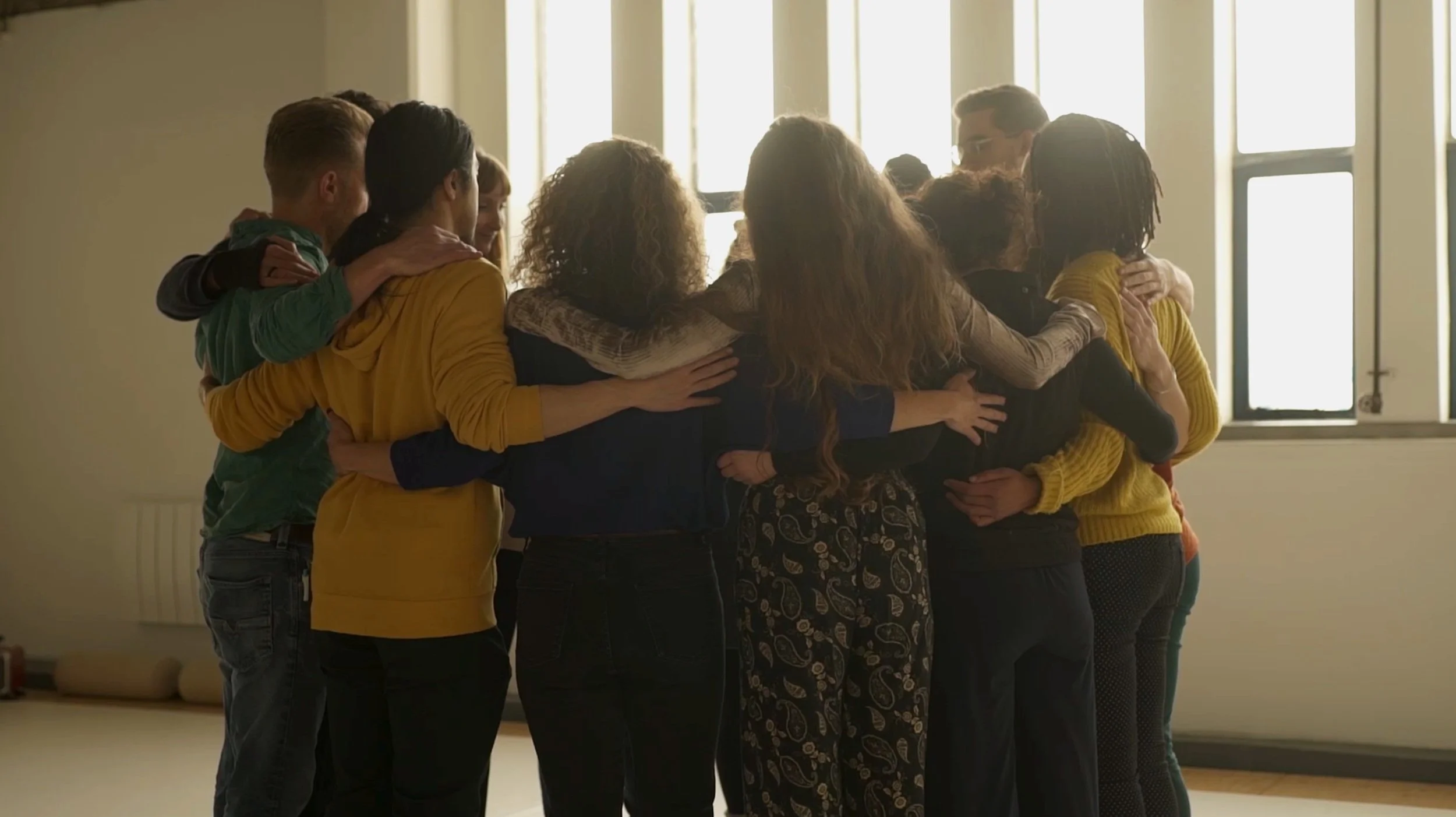
Can we reclaim singing together as part of our shared humanity?
These days I'm leaning more and more towards using the term spontaneous collective singing instead of vocal improvisation. The term "improvisation" has often become associated, through Western music and scholarship, with specific musical practices such as jazz, Baroque improvisation over chord progressions, and forms of free improvisation — and I find that association increasingly limiting.
Spontaneous collective singing describes a much broader range of music-making found across Indigenous communities worldwide, and encompasses the long and diverse history of music-making in human societies. It points to the natural processes through which melodies and songs emerge, develop collaboratively, change over time, and are held in collective memory.
Placing what we now call vocal improvisation within this broader umbrella can help situate the practice in a richer context and allow us to understand it in a wider frame.
It also opens a way of reconnecting with forms of embodied, collective musical wisdom and creativity cultivated for millennia by human communities across the globe. In this sense, the term honours these traditions and, more broadly, our shared human ancestry.
What I love about the phrase is how it weaves together aspects that can sometimes appear paradoxical: the artistry of vocal improvisation and its communal, shared dimension.
It also challenges the perception of music as a product, with its imperatives of "perfection," and instead frames it as an experience and a living process — perfectly imperfect in its "isness."
For those who practice what is currently called vocal improvisation, I think this perspective can be genuinely liberating. It supports the understanding that who you are, and what you bring in any given moment, can be enough to take part in a spontaneous musical interaction. It can soften hierarchies between those who are more musically trained and those with less formal experience, as well as that sense that one must first study, improve, or attain a certain level of skill before participating.
This is not to say that formal training is unimportant, nor that the quality of music is irrelevant — although beauty is always a subjective perception. It's more that the emphasis may shift toward practicing, learning, and developing relationality alongside vocal and musical prowess.
Relationality includes deep listening, the capacity to empathise with and connect to what others are doing, and other interpersonal skills that contribute to becoming a more responsive ‘spontaneous collective singer’ — rather than following the vertical, linear model of education focused primarily on increasing musical complexity and vocabulary. Musical complexity and vocabulary remain valuable, but as part of a wider set of skills that includes flexibility, relational awareness, and the ability to draw from a broader palette of expressive, intuitive and vocal resources in responding to musical stimuli.
This framing also helps free the practice from the Western polarity between improvisation and composition — a distinction closely tied to ideas of authorship and the figure of the individual creator — which can quietly constrain us in ways we don't always notice.
At the same time, it relieves improvisation of the pressure to constantly produce something new, radical, or unprecedented. It frees us from what I sometimes think of as "the prison of novelty." Music can be inspired, unique, alive, and of the moment, while also drawing from personal histories, ancestry, collective archetypes, embodied memory, and forms of musical wisdom cultivated across generations.
Spontaneous collective singing places singing — and the human voice — in relationship, not above or separate from life events, cycles of nature, the wider environment, and the textures and quality of sound itself. It restores the potential for music that emerges through participation, listening, and human connection, made collectively. It draws from diverse experiences, skills, and musical histories — less tied to hierarchy or any individual protagonist, and more a tapestry of sound and silence woven together.